Inclusive Recruitment - meet Sarah

A lifetime of experience. But is anyone looking beyond her age?

Get to know Sarah

Sarah is 59 and lives in Shrewsbury with her ageing rescue greyhound, Arthur, who has claimed most of the sofa as his own.

For 32 years, Sarah worked for the same manufacturing business, starting as an administrator and working her way up to operations manager. She built a successful career managing people, solving problems and keeping things running smoothly, often under considerable pressure.  Then the business restructured, and Sarah found herself looking for work for the first time since the early 1990s.

Outside work, she’s fascinated by local history and volunteers at a heritage railway, where she helps coordinate volunteers, organise events and occasionally step in as a tour guide. She’s also famous within her family for her fiercely competitive Christmas quiz, which her nephew once described as “the Olympics of unnecessary knowledge.”

Sarah has always enjoyed learning new things. She keeps a handwritten notebook of useful discoveries, with recent entries covering AI tools, QR codes and getting more out of Microsoft Teams.

She’s proud of her career and everything she’s achieved, but redundancy has shaken her confidence. After decades of being valued for her knowledge and judgement, she’s beginning to wonder whether employers see her experience as an asset or simply assume she’s past her best.

Her former colleagues still regularly call her for advice. She just wishes prospective employers could see what they see.

A day in the life

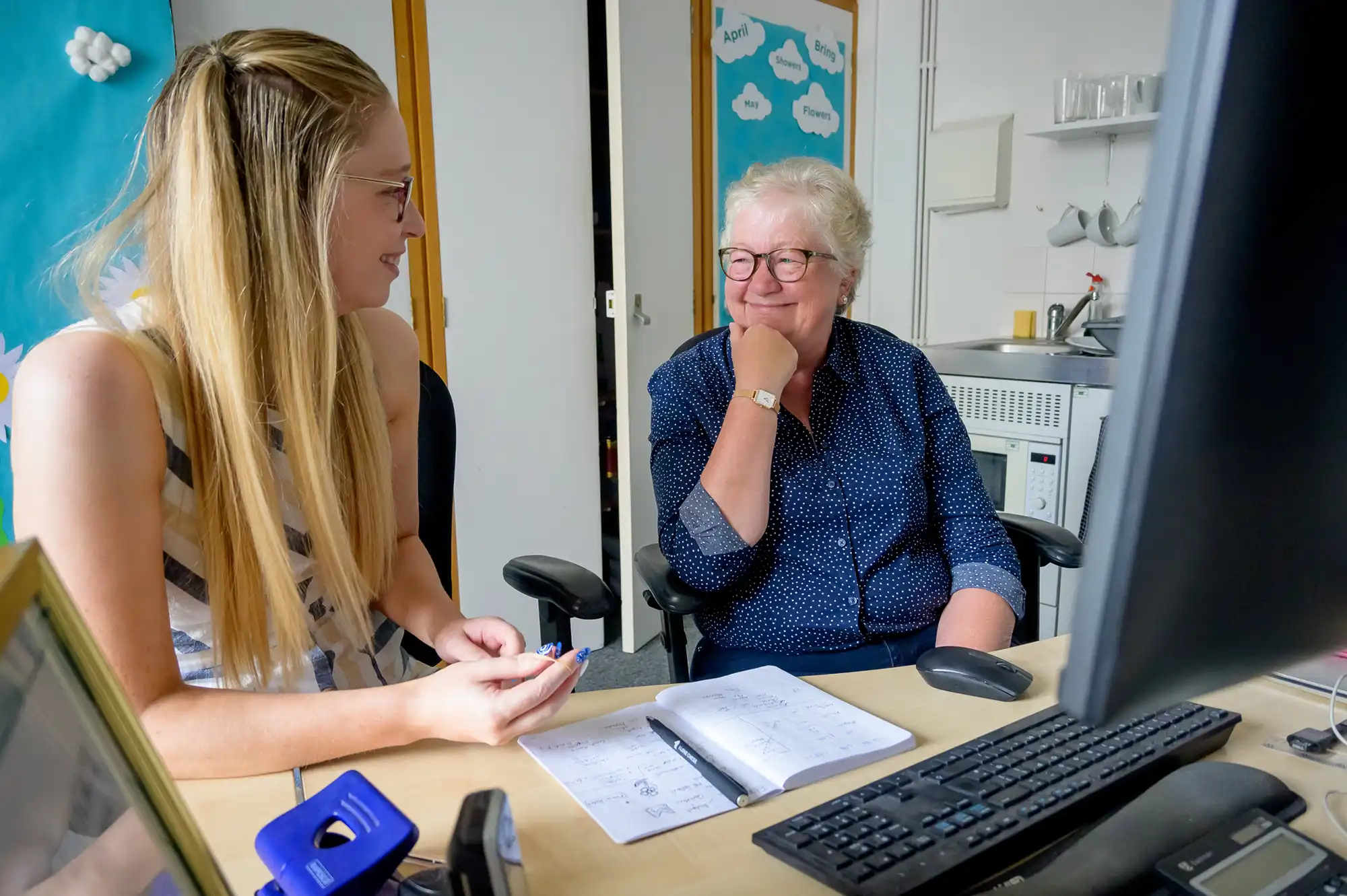
Sarah starts her mornings checking job websites, looking for roles where she can put her experience in administration, operations and people management to good use.

She’s become familiar with online applications, video interviews and recruitment platforms, although the process is very different from the last time she searched for work.

The biggest challenge isn’t necessarily the technology. It’s knowing how to present more than three decades of experience in a way that gets noticed.

Some vacancies ask for recent qualifications or experience with particular systems, even when Sarah has spent years doing much of the work the role requires. Others use language about being young, energetic or a good cultural fit, leaving her wondering whether she’d be welcome.

She’s also conscious that employers might assume she’s overqualified, expecting a higher salary or planning to retire soon, without ever asking about her ambitions. Between applications, Sarah continues volunteering, learning new skills and supporting friends and family. She still enjoys being busy, solving problems and helping others.

But after another application goes unanswered, it’s difficult not to question whether her age is influencing decisions before she’s even had the opportunity to introduce herself.

  • Over 30 years of professional experience
  • Extensive administration and operations management expertise
  • Strong leadership and people management skills
  • Excellent organisational and planning abilities
  • Calm and effective under pressure
  • Experienced in solving complex problems and making decisions
  • Reliable, professional and committed
  • Strong communication and relationship-building skills
  • Able to mentor and support colleagues
  • Adaptable and willing to learn new skills
  • Experience coordinating volunteers and community activities
  • Valuable industry knowledge and practical judgement
  • Older workers are resistant to change
  • Experienced candidates struggle to learn new technology
  • People approaching 60 are no longer interested in career development
  • Older applicants are less adaptable than younger candidates
  • Someone with extensive experience will automatically expect a higher salary
  • Experienced candidates are overqualified for roles with fewer responsibilities
  • Older workers are less productive or motivated
  • Someone who has worked for one employer for decades will struggle to adapt to a new workplace
  • Older employees are unlikely to stay long enough to justify investment in training
  • Focus on Sarah’s skills, experience and ambitions rather than her age
  • Recognise that age doesn’t determine someone’s ability to learn or adapt
  • Don’t assume long service with one employer means limited experience or flexibility
  • Value transferable skills developed throughout a career
  • Avoid making assumptions about retirement plans, salary expectations or career aspirations
  • Recognise that experienced workers can bring fresh ideas as well as established knowledge
  • Don’t confuse unfamiliarity with a particular recruitment platform with a lack of digital capability
  • Consider the value of different generations working and learning together
  • Remember that older jobseekers have diverse circumstances, interests and ambitions
  • Focus on removing barriers rather than changing the individual 

Small changes make a big difference

For someone like Sarah, inclusive recruitment means recognising the value of experience without making assumptions about age. After more than three decades of successful employment, she has the skills, knowledge and professional judgement to make a valuable contribution. But if employers focus too heavily on recent qualifications, career history or perceived cultural fit, they risk overlooking someone who could be exactly right for the role.

Age-inclusive recruitment doesn’t mean giving experienced candidates preferential treatment. It means assessing everyone fairly against the skills and capabilities the job actually requires.

Small changes that could make a big difference:

  • Review job adverts for language that could unintentionally discourage older applicants
  • Focus on essential skills and capabilities rather than unnecessary qualification or experience requirements
  • Use structured interviews and consistent assessment criteria
  • Recognise transferable skills gained throughout a candidate’s career
  • Avoid assumptions about salary expectations, retirement plans or willingness to learn
  • Ensure recruitment materials reflect people of different ages and career stages
  • Assess digital skills based on actual role requirements rather than age-related assumptions
  • Provide clear information about recruitment processes and assessment expectations
  • Train hiring managers to recognise and challenge age-related bias
  • Promote learning, development and progression opportunities for employees at every career stage
  • Give candidates the opportunity to demonstrate how their experience could benefit the organisation.

For Sarah, a fair recruitment process means being recognised for what she can contribute today, not judged by assumptions about where she is in her career.

Get in touchFind out more
An apprentice sitting at a desk with a mentor

Helping employers to find and keep staff

Our team is always exploring new ideas and opportunities to build meaningful solutions with real impact. We work best co-designing with employers, local stakeholders and people with lived experience. Connect with us to explore how we can work together for change.

Empowering communities across the UK through personalised support in health, learning, mindset change, and pathways to meaningful employment.

Ensuring your safety and support

If you need help or support, our offices are a safe environment.
Contact us

EMPLOYMENT

249 Silbury Boulevard,
Milton Keynes, Buckinghamshire,
United Kingdom, MK9 1NA

LEARNING

Room 471, Building 4
North London Business Park,
Oakleigh Road South,
London,
England, N11 1GN

HEALTH

249 Silbury Boulevard,
Milton Keynes, Buckinghamshire,
United Kingdom, MK9 1NA

INTUITIVE THINKING SKILLS

The Think Tank, 457 Chester Rd,
Old Trafford, Stretford,
Manchester M16 9HA